Every card payment has a price. The only question is how that price is shown to you.
Most European payment providers use one of two models: IC++ or a blended rate. Both can be fair, and both can be expensive. The difference is how much of the cost you can see, and who carries the risk when card costs change.
The short version
Blended: one percentage on every payment, whatever card the customer uses. Simple and predictable.
IC++: the real cost of each card, plus a fixed margin. Transparent, and usually cheaper when most customers pay with everyday European debit cards.
Neither is better in general. Your card mix, your volume and your appetite for detail decide it.
1. Three fees inside every card payment
Whatever the pricing model, the same three fees sit underneath:
- Interchange goes to the bank that issued the customer's card. It's the biggest and most variable part. It depends on the card type, where the card was issued, and whether the payment was in person or online.
- Scheme fees go to the card network, such as Visa or Mastercard, for running the rails.
- The margin goes to your payment provider, for processing, payouts, risk, support and technology.
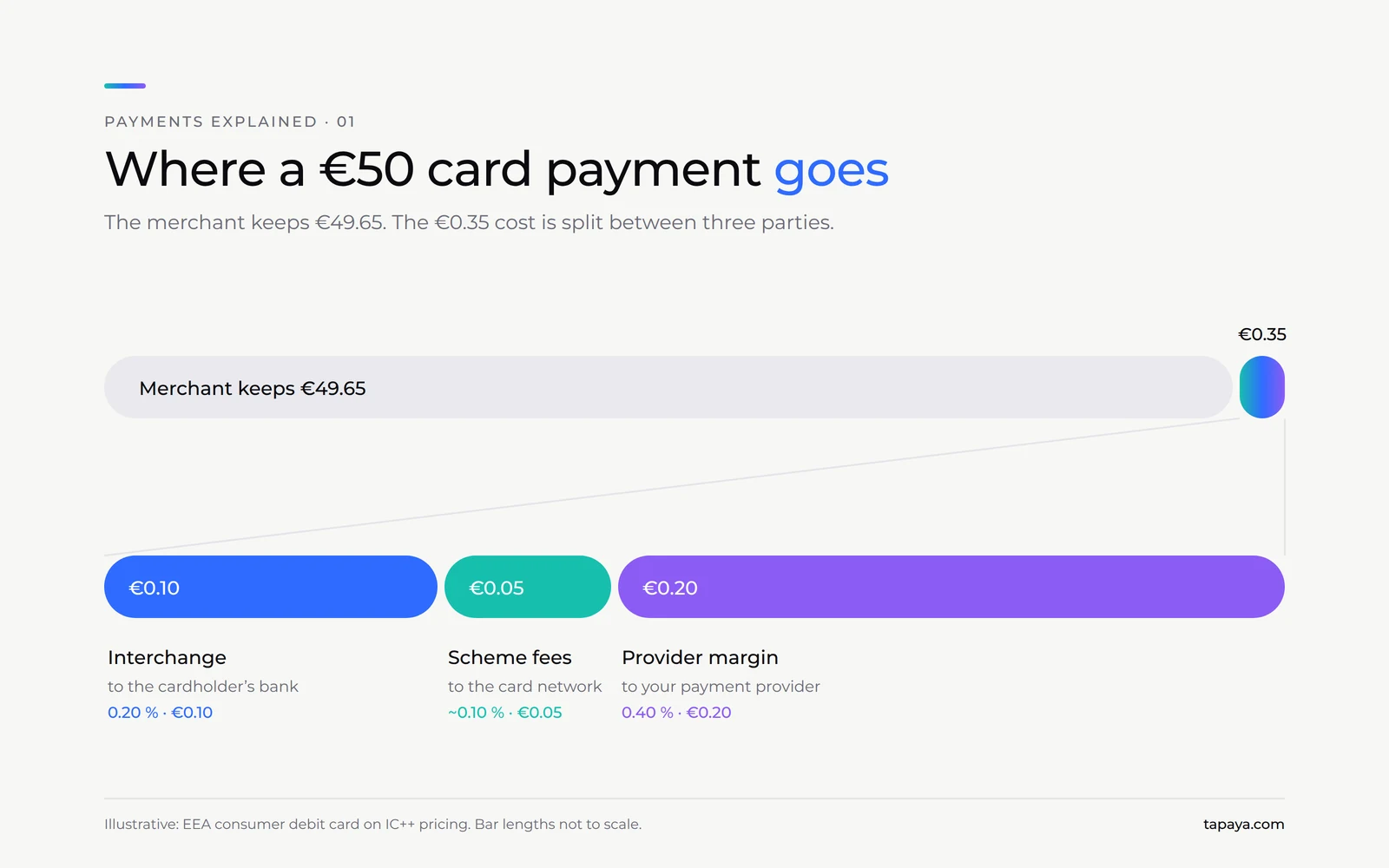
Figure 1. Where a €50 card payment goes.
2. Two ways to package them
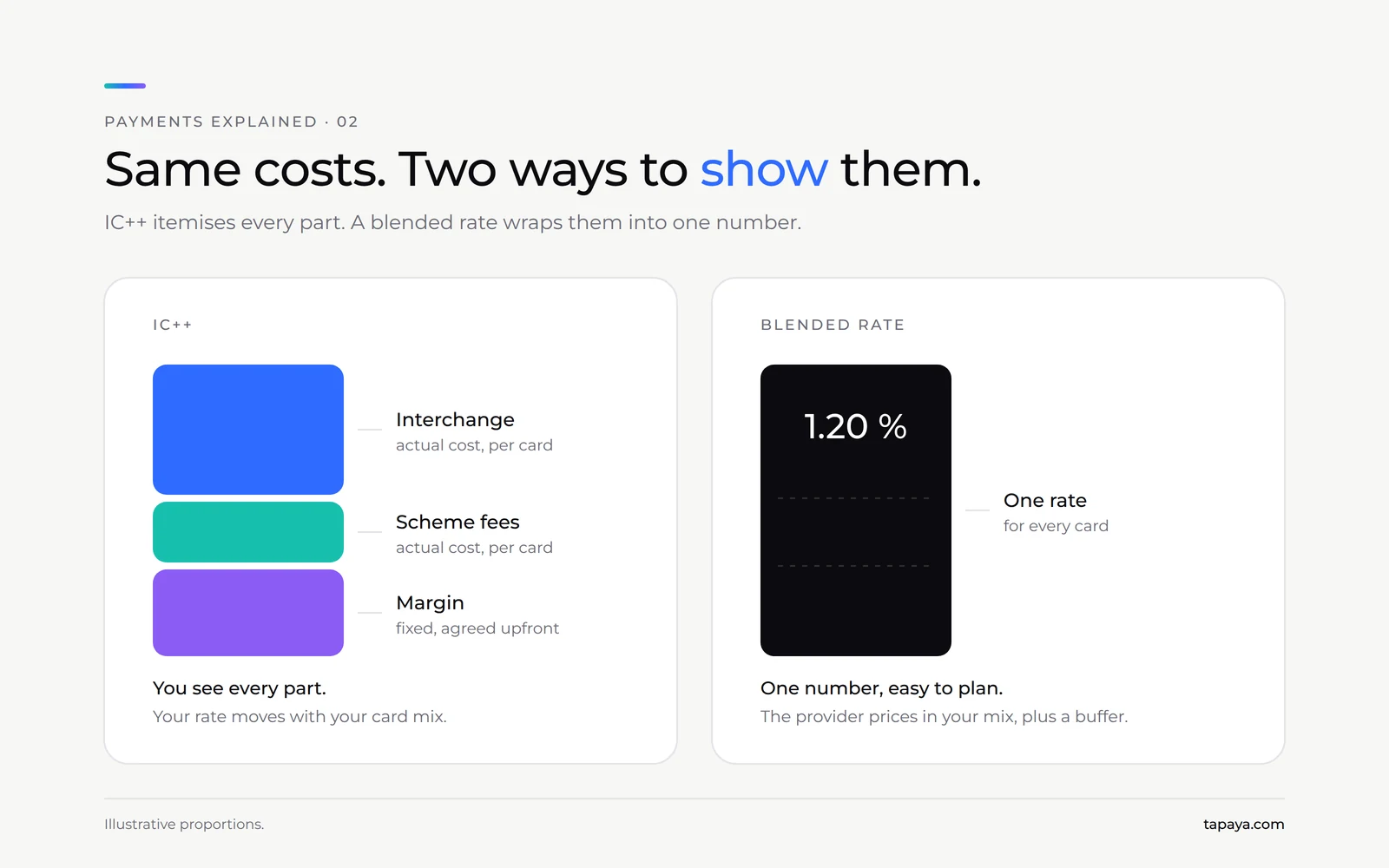
Figure 2. The same costs, itemised (IC++) or wrapped into one number (blended).
IC++: every cost on its own line
IC++ stands for interchange plus plus: the actual interchange, plus the actual scheme fees, plus a fixed margin agreed with your provider.
Good: you see exactly what you pay and what your provider earns. Cheap cards stay cheap, and when interchange falls, your costs fall with it.
Watch out: your effective rate moves every month with your card mix, and statements are long. Scheme fees alone can run to dozens of lines.
Related: IC+ (interchange plus) shows interchange separately but bundles scheme fees and margin into one number. It sits between the two models.
Blended rate: one number for everything
You pay one percentage, sometimes plus a small fixed fee, on every payment. A local debit card and a foreign corporate card cost the same.
Good: you know your price in advance, and the invoice is one line.
Watch out: the provider sets the rate on the card mix it expects, plus a buffer. If most of your customers pay with cheap local cards, you're paying for the expensive ones too.
Related: you'll often see MDR (merchant discount rate). Strictly, it means the total fee in any model, but in practice "MDR pricing" usually means a blended rate.
3. Scheme fees, up close
Scheme fees aren't one flat number. Each is a small percentage plus a few cents, and both depend on where the card was issued. This is what Visa and Mastercard charge on a €100 in-person debit payment at a Czech merchant (acquirer schedule, July 2026):
| Card issued in | Visa debit | Mastercard debit |
|---|---|---|
| Czech Republic | 0.138 % + €0.012 = €0.15 | 0.148 % + €0.027 = €0.18 |
| Another EEA country | 0.138 % + €0.020 = €0.16 | 0.268 % + €0.033 = €0.30 |
| United Kingdom | 0.238 % + €0.020 = €0.26 | 0.268 % + €0.033 = €0.30 |
| Outside Europe | 0.588 % + €0.111 = €0.70 | 0.898 % + €0.181 = €1.08 |
Two things stand out. A card from outside Europe can cost five to six times more than a local one. And the fixed part hurts small tickets: on a €5 coffee, a local Visa debit scheme fee is about €0.02, close to 0.4 % of the sale.
4. A worked example
A café takes a €50 contactless payment. Its provider offers either IC++ with a 0.40 % margin, or a blended rate of 1.20 %. (Illustrative figures.)
| Card | Interchange | Scheme | Margin | IC++ total | Blended |
|---|---|---|---|---|---|
| Consumer debit, issued in the EEA | 0.20 % | ~0.10 % | 0.40 % | 0.70 % · €0.35 | 1.20 % · €0.60 |
| Consumer credit, issued outside the EEA | 0.30 % | ~0.60 % | 0.40 % | 1.30 % · €0.65 | 1.20 % · €0.60 |
| Corporate card | ~1.50 % | ~0.15 % | 0.40 % | 2.05 % · €1.03 | 1.20 % · €0.60 |
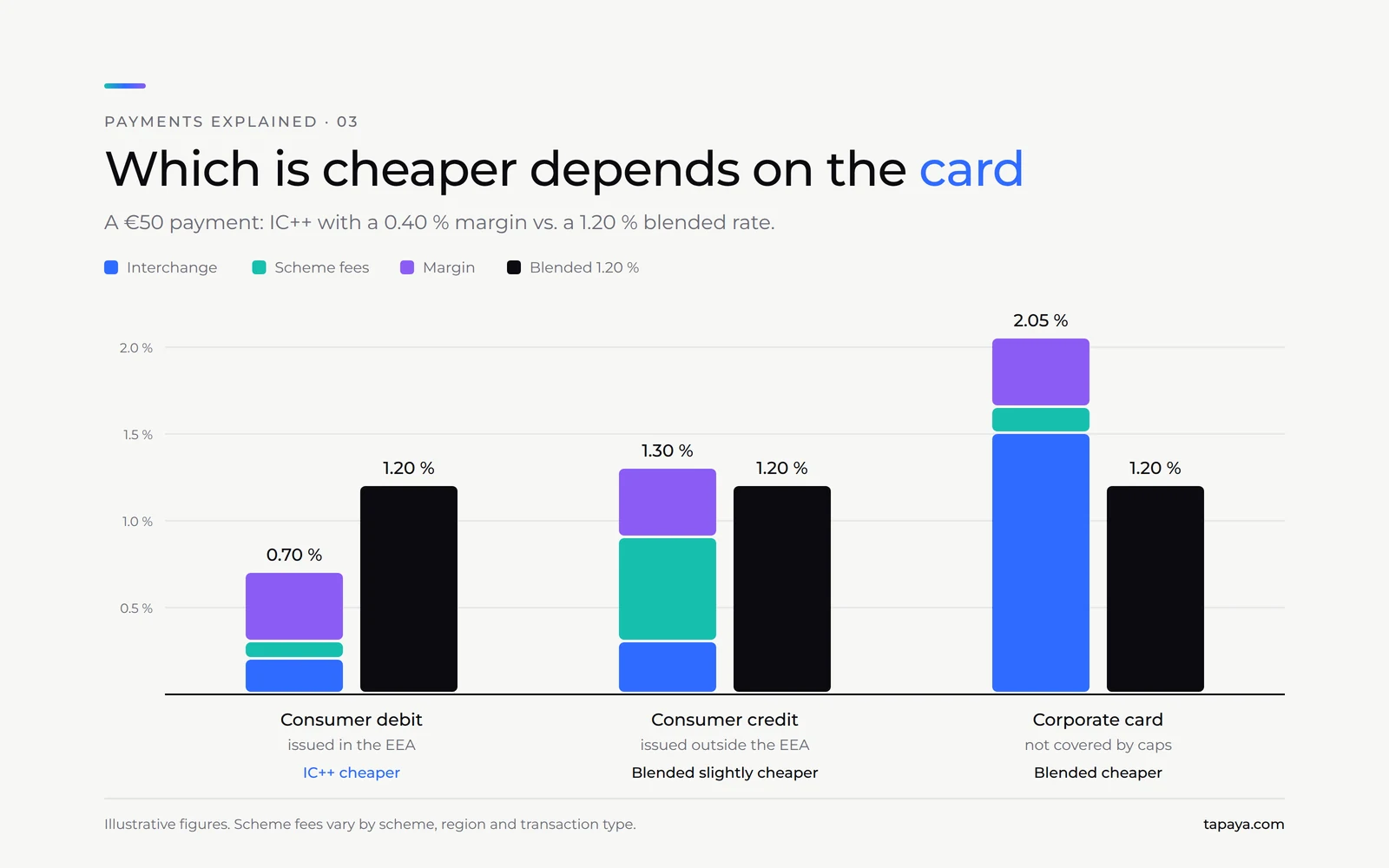
Figure 3. Which model is cheaper depends on the card.
On the local debit card, IC++ wins clearly. On the corporate card, blended wins. So the real answer depends on the mix: a neighbourhood café full of local debit cards usually saves with IC++, while a hotel bar full of business travellers may not.
5. Which one fits?
| Blended | IC++ | |
|---|---|---|
| Best for | New, small or seasonal businesses; anyone who values simplicity | Growing, higher-volume businesses; mostly local, debit-heavy customers; platforms |
| Strengths | Easy to budget · simple reconciliation · protects you from expensive cards | Full transparency · usually cheaper with EU debit cards · interchange cuts reach you directly · easy to compare margins |
| Weaknesses | Overpay on cheap cards · margin is hidden · offers hard to compare | Cost varies month to month · long statements · expensive cards passed on in full |
| Choose it if… | many customers use business or non-European cards, or nobody wants to read fee statements | you process meaningful volume, your customers are mostly local, and you want to see and control every cost |
6. For platforms and integrators
If you embed payments in your software, you're choosing a pricing model on behalf of your merchants, so the choice matters twice.
A common setup is to buy on IC++ and sell to merchants at a blended rate. It's simple for the merchant and leaves you a margin. But it puts the card-mix risk on your side: if a merchant's customers shift towards corporate or foreign cards, your margin shrinks or turns negative.
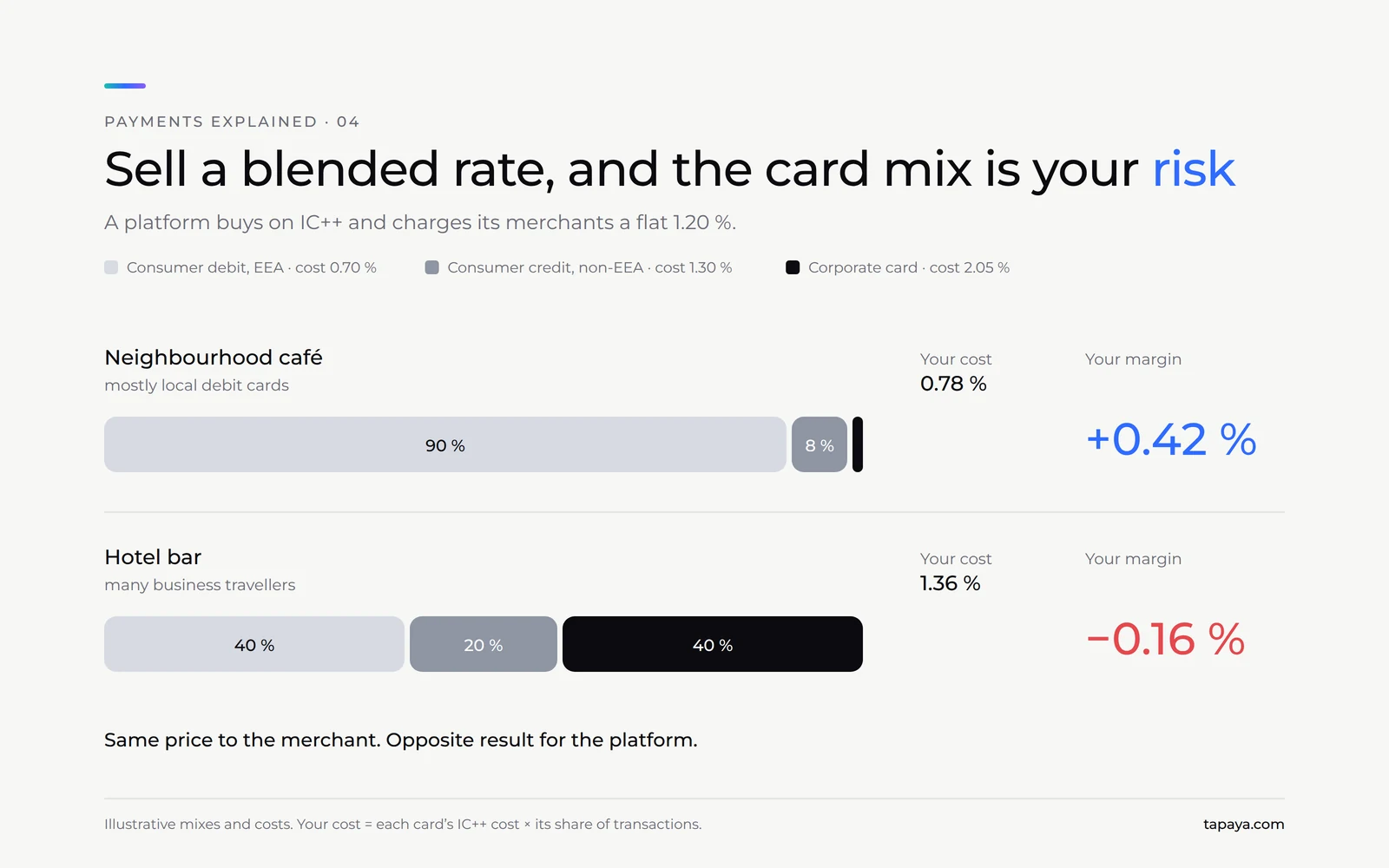
Figure 4. The same blended price can earn or lose money, depending on the card mix.
If you go this way: know each merchant's card mix, monitor it, and price your blended rate with that risk in mind.
7. The European rules in brief
- Capped interchange. Since 2015, interchange on consumer cards issued in the EEA is capped at 0.2 % for debit and 0.3 % for credit.
- Cards from outside Europe. Visa and Mastercard have committed to caps of 0.2 % / 0.3 % in person and 1.15 % / 1.5 % online, extended until November 2029.
- Not capped: commercial (business) cards, and three-party schemes such as American Express. These cause most surprises on an IC++ statement.
- Itemised by default. EU acquirers must show charges separately for each card category and brand. A merchant gets a single blended rate only if they ask for it in writing.
- Monthly breakdown. At least once a month, providers must show merchants the merchant service charge and the interchange separately.
8. How it looks across Europe
No official statistic shows which model dominates in each country. What the available data does show is consistent:
- Large merchants lean IC++. In the European Commission's 2020 review, about 60 % of surveyed merchants kept the default itemised pricing. Most respondents were large.
- Small merchants mostly pay blended rates. In the UK, an estimated 95 % of merchants are on blended pricing, including 98 % of those with card turnover below £10 million.
- Provider defaults differ. Some large providers price on IC++ by default; others start everyone on a blended rate and offer IC++ only to high-volume businesses.
What varies much more by country is the card landscape underneath, and that decides how much a blended rate can hide.
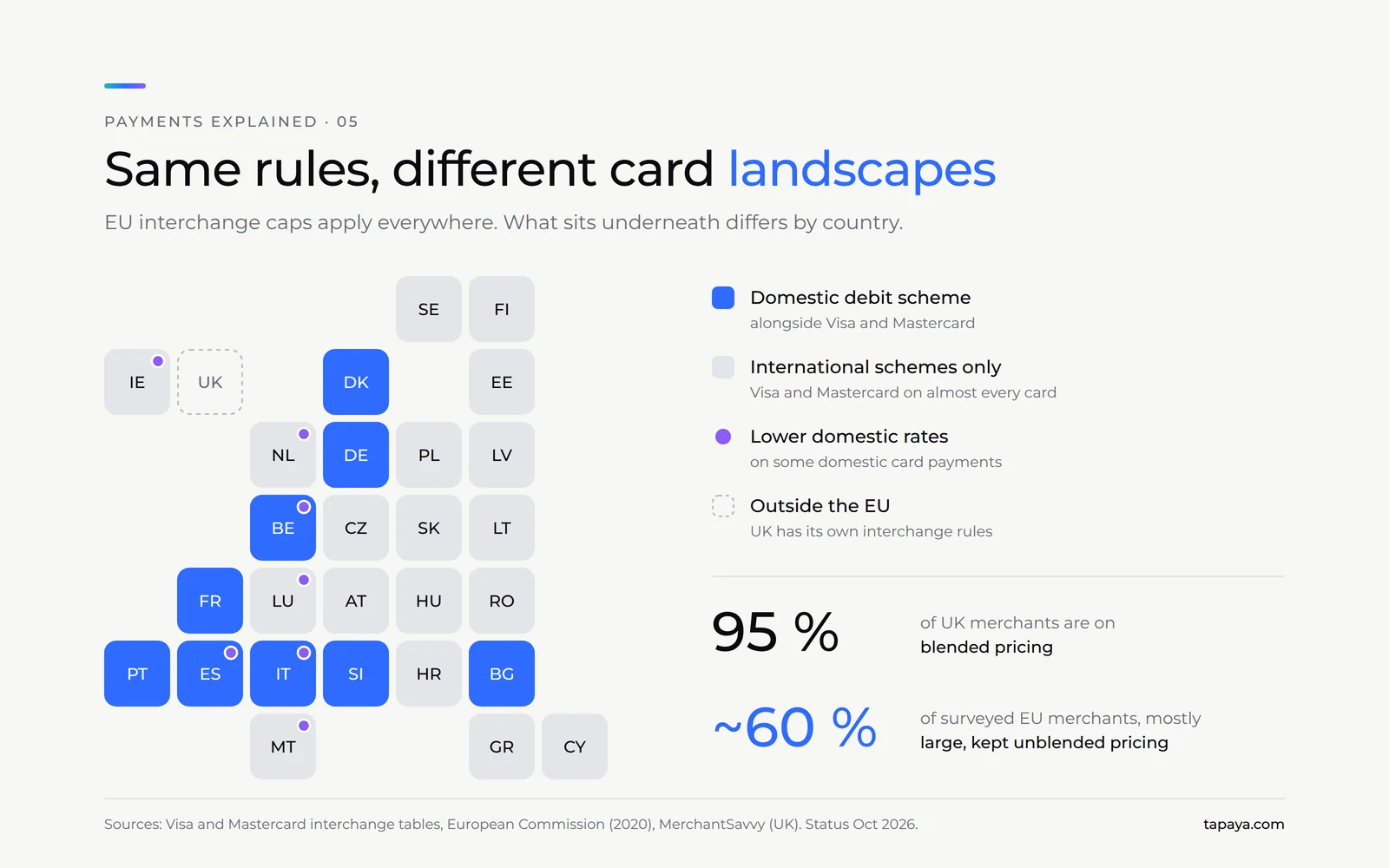
Figure 5. Domestic card schemes and lower national interchange rules across Europe.
Country by country: cards
| Country | Card schemes | What's specific |
|---|---|---|
| Czechia, Slovakia | Visa, Mastercard | EU caps. Czech price lists often call IC++ "MIF++" and quote the lowest possible rate. |
| Austria | Visa, Mastercard | EU caps, no domestic card scheme. |
| Poland | Visa, Mastercard | EU caps. Strong mobile alternative: BLIK (see below). |
| Germany | girocard + Visa, Mastercard | Domestic debit scheme with its own fees. |
| France | Cartes Bancaires + Visa, Mastercard | Most cards are co-badged; the scheme used affects the cost. |
| Belgium | Bancontact + Visa, Mastercard | Debit interchange limited by law to €0.056; Bancontact charges 0.1 %, capped at €0.05. |
| Netherlands | Visa, Mastercard | Domestic debit interchange is a flat €0.02. |
| Ireland | Visa, Mastercard | Domestic debit interchange fixed at 0.1 %. |
| Luxembourg, Malta | Visa, Mastercard | Below-cap rates possible on some domestic payments. |
| Italy | Bancomat + Visa, Mastercard | Lower interchange under €5 (e.g. 0.18 % on Visa debit). |
| Spain | Visa, Mastercard; network STMP | Up to €20: 0.1 % debit, 0.2 % credit. Above €20: debit max 0.2 % or €0.07. |
| Denmark | Dankort + Visa, Mastercard | Dankort fees set by law; its share of in-store payments fell from 75 % (2017) to 39 % (2025). |
| Portugal, Slovenia, Bulgaria | Multibanco / Activa, BA, Karanta / Borica | Domestic schemes, co-badged with Visa or Mastercard. |
| Baltics, Finland, Sweden | Visa, Mastercard | EU caps, no domestic card scheme. |
| United Kingdom | Visa, Mastercard | Own rules outside the EU; EU cards now count as inter-regional. |
Sources: Visa and Mastercard domestic interchange tables (2024–2026), Belgian and Danish sources, European Commission (2020). Interchange tables change once or twice a year.
Beyond cards: national mobile payment schemes
Poland's BLIK isn't alone. Many European countries have a bank-owned mobile payment system that moves money straight between bank accounts, without the card rails. They started with person-to-person transfers and online checkout, and are now moving into shops.
| Country | Scheme | Where it stands |
|---|---|---|
| Poland | BLIK | 2.9 billion transactions in 2025, the leading online method. In stores, nearly half of BLIK payments are contactless, accepted wherever Mastercard contactless is. Interchange around 0.17 %. |
| Spain | Bizum | Over 32 million users, accepted by 120,000 online retailers and 1.6 million physical stores. |
| Portugal | MB WAY | More than 70 million transactions a month at over 500,000 points of sale and merchants. |
| Italy | Bancomat Pay | Mobile payments from the Bancomat domestic scheme. |
| Norway, Denmark, Finland | Vipps MobilePay | Nordic mobile payments, formed when Vipps and MobilePay merged in 2022. |
| Sweden | Swish | Bank-owned mobile payments, widely used for transfers and small merchants. |
| Germany, France, Belgium, Luxembourg, Netherlands | Wero | The banks' European wallet, with about 57 million users. It replaced Payconiq in Belgium and Luxembourg in 2026 and Paylib in France, and iDEAL in the Netherlands is moving to Wero by 2027. In-store payments are being rolled out. |
| Greece | IRIS | Instant payments, connected cross-border with Italy, Portugal and Spain since July 2026. |
These systems are also joining up. In September 2026, Bancomat, Bizum, EPI/Wero, SIBS–MB WAY and Vipps MobilePay set up the European Network for Payments, a joint company to connect their services, covering about 130 million users in 13 countries. BLIK and IRIS have joined the wider EuroPA alliance. Cross-border transfers come first; online and in-store interoperability is targeted for 2027.
Why it matters for pricing: these schemes have their own fee structures, separate from card interchange. As they grow in shops, a statement will include more than just card lines, which is one more reason a single blended rate rarely matches the real cost of every payment.
Whichever model you choose, the most useful question to ask any provider is the same: can you show me what's inside my rate? A good partner can answer that in one sentence.
Glossary
| Term | Meaning |
|---|---|
| Acquirer | The provider that accepts card payments for the merchant and pays out the money. |
| Issuer | The bank that issued the customer's card. |
| Card scheme | The network connecting issuers and acquirers, such as Visa or Mastercard. |
| Interchange | The fee paid to the issuer on each card payment. Capped in the EU for consumer cards. |
| Scheme fee | The card network's fee for using its rails. |
| Margin (markup) | The provider's own fee on top of interchange and scheme fees. |
| MDR / MSC | Merchant discount rate / merchant service charge: the total fee a merchant pays. Often used to mean a blended rate. |
| A2A | Account-to-account: a payment that moves directly between bank accounts, like BLIK or Wero. |
| Card mix | The share of each card type (debit, credit, business, local, foreign) in your payments. |
At Tapaya, we help software companies and payment providers add card acceptance to the devices and apps their merchants already use. Our pricing isn't one-size-fits-all: we can set it up as IC++, as a blended rate or as a mix, depending on what works for you and your merchants. Not sure which? Share an estimate of volume and card mix and we'll model both with you.